Digitizing Handwritten Clinical Records at Cape Town Infusion Centre
How Realize-365 is unlocking years of paper-based patient histories at the largest infusion centre in South Africa, supporting safer care today and real-world evidence tomorrow.
Both record types ingested into one summary
Foundation for real-world evidence and benchmarking
Complete history at every patient encounter
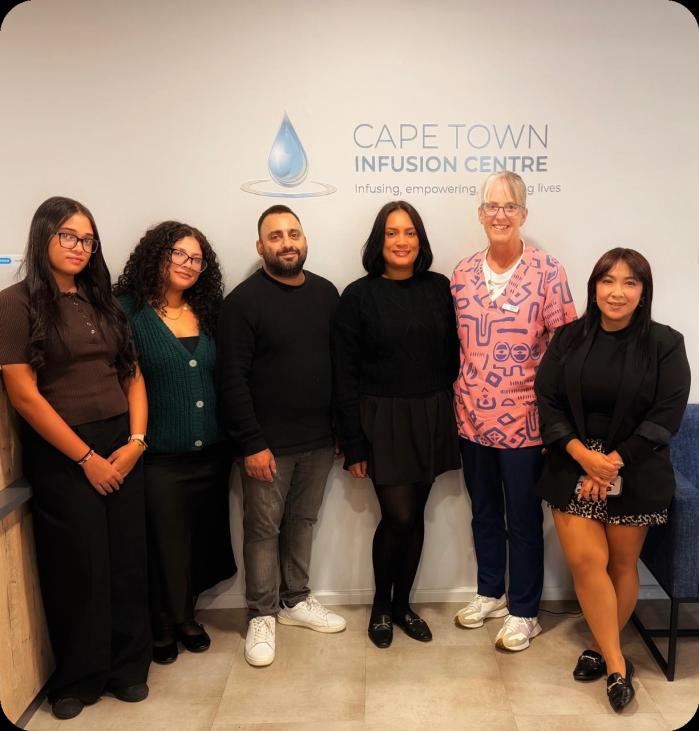
A South African pioneer of patient care
We are genuinely thrilled to be working with Karin Davidson and the team at Cape Town Infusion Centre, the largest infusion centre in South Africa and a true beacon of innovation in patient care across the region. Karin has built something extraordinary: a centre that brings together an experienced team of doctors and nurses delivering a wide range of intravenous therapies, all grounded in a patient-first philosophy where every individual's story matters. "Infusing, empowering, changing lives" is not a tagline for Karin and her team, it is a daily practice.
1The challenge
Like many clinics across Africa, Cape Town Infusion Centre holds a rich and clinically valuable archive of patient records, the vast majority of which are handwritten. These records contain critical longitudinal information: treatment histories, infusion protocols, dosages, adverse reactions, comorbidities, and clinician observations accumulated over years of care. Until now, this information has been effectively locked away from digital clinical workflows, limiting its usefulness at the point of care and making population-level analysis impossible.
2The approach
Through a pilot of Realize-365, we set out to digitize Cape Town Infusion Centre's patient records and make them available within a structured clinical summary. The pilot pushed us to develop a significant enhancement to the product: Realize-365 now ingests and interprets scanned handwritten records alongside digital ones, extracting key clinical entities such as diagnoses, medications, dosing regimens, and infusion histories, and surfacing them in a consolidated, clinician-ready summary.
3The outcome
For clinicians at Cape Town Infusion Centre, every patient encounter is now supported by a complete longitudinal record, with handwritten notes integrated seamlessly alongside digital data. This reduces the time spent searching across paper charts, gives clinicians faster access to the full medication and infusion history, and ensures no element of a patient's history is overlooked.
Beyond individual care, the digitized dataset creates a foundation for real-world evidence generation: the ability to analyze treatment outcomes across the full patient population, benchmark clinical performance, identify best-practice protocols, and contribute to the wider evidence base for infusion therapy in the region.
"Working with Realize-365 has been a real step change for us. At Cape Town Infusion Centre, every patient's story matters, and being able to bring their full history, handwritten notes and all, into a rich digital clinical summary means we can care for them with the complete picture in front of us. More than that, it gives us the power to learn from our outcomes across our entire patient base, so we can keep raising the bar for the people who trust us with their care."
4Why it matters
Handwritten records are the everyday reality for clinics across Africa, and until now they have been a stubborn barrier to unlocking the full power of digital clinical tools. By solving this alongside a pioneer like Karin, we are opening the door for healthcare providers everywhere to bring their full patient history into the modern era, deliver safer and more personalized care, and participate in the kind of real-world research that drives better outcomes for patients.
We are beyond thrilled to have worked with Karin and the entire team at Cape Town Infusion Centre. With their clinical expertise, unwavering dedication, and ambition to keep pushing the boundaries of great infusion care, they really are one of a kind. Karin is a true South African pioneer, and we are proud to stand alongside her as we bring this capability to more organizations in the months ahead.
With thanks to our support team
This pilot was only possible because of the Realize-365 support staff who stood behind it every step of the way. From the engineers who built the handwritten ingestion capability, to the clinical and implementation specialists who walked records through the platform alongside Karin's team, to the customer success and operations colleagues who kept everything moving day to day, every part of the company contributed. Their care, craft, and quiet hard work are stitched into every line of this story, and we are grateful to each of them.
What this story shows
Paper to digital, in one place
Realize-365 reads handwritten and digital records together, so legacy paper charts stop being a dead end and start contributing to clinical summaries.
Built with clinicians, not at them
The handwritten ingestion capability was developed alongside Karin's team, shaped by the realities of frontline infusion care.
A foundation for evidence
A unified digital record set unlocks population-level analysis, benchmarking, and contribution to the wider evidence base for infusion therapy.